
A fat tire electric cruiser bike gives retailers a product story built around relaxed riding, distinctive styling and everyday enjoyment. The opportunity extends from individual leisure customers to carefully planned tourism and rental projects. For distributors and importers, the strongest range connects that visual appeal with rider fit, practical equipment and an ownership experience customers can understand before they buy.
01 / Market scale and the leisure opportunity
Research published by BOVAG and RAI Vereniging for the Dutch bicycle market in 2025 records 391,318 units in its e-bike category, representing 73% of total bicycle sales revenue. E-bike unit sales fell approximately 4%, while their average selling price increased 6%.
These figures use the survey’s own category definitions; they are not a fat-tire cruiser subtotal. They also show why a market opportunity should not be described as universal growth. A business may need to compete through the product mix and customer experience even when total unit demand is softer.
The sources reviewed for this article do not establish a separate global value for electric fat-tire cruisers. A more useful launch plan estimates demand from specific shops, customers and operators rather than applying an assumed percentage to the entire e-bike market.
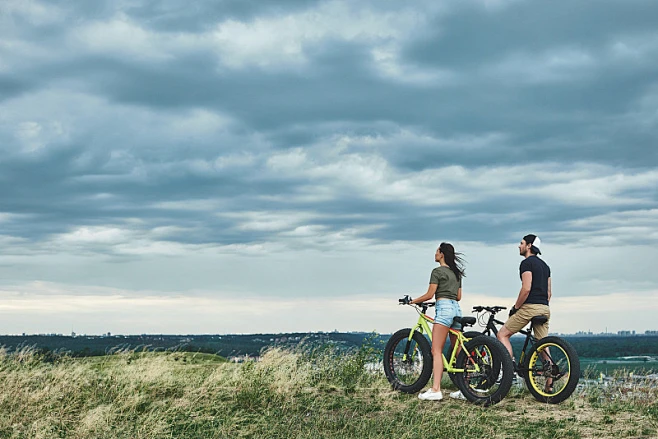
02 / Growth factors: comfort, identity and useful equipment
Comfort that customers can evaluate
A cruiser offer should begin with riding position, not a promise that one frame suits everyone. Demonstrate handlebar reach, seating position, mounting access and low-speed handling. Give the customer accurate dimensions and time to assess the bicycle.
For shoppers researching fat tire e-bikes for tall riders, tire width is not a substitute for frame fit. Compare the manufacturer’s rider guidance with the actual frame dimensions and adjustment limits. A larger-looking bicycle does not by itself establish suitable reach or pedaling position.
A recognizable lifestyle product
A fat cruiser electric bike can be positioned around a particular visual identity, from a clean everyday look to a more distinctive leisure design. For a private-label project, coordinate approved colors, graphics and accessories with the intended customer. Keep the same configuration visible in product photographs, specifications and quotations.
Practical accessories with a clear purpose
Discuss baskets, racks, fenders and lighting according to the planned use. Confirm mounting compatibility and loading limits before including an accessory in a sales package. The objective is a useful complete bicycle rather than a long equipment list with no connection to the customer’s routine.
03 / Segment the cruiser market by customer and channel
These groups provide a merchandising framework, not published market shares. A distributor can use them to explain why different cruiser configurations belong in the same collection.
| Segment | Potential channel | Product emphasis |
|---|---|---|
| Everyday leisure riding | Bicycle dealers and lifestyle retailers | Rider fit, practical controls and useful accessories |
| Coastal recreation | Destination retailers and suitable rental operators | Route suitability, maintenance instructions and storage |
| Resort or managed-site use | Hospitality operators and local service partners | Approved commercial use, fleet consistency and charging plans |
| Private-label cruiser collections | Importers and regional dealer groups | Consistent branding, documented configurations and parts support |
A fat tire beach electric bike should be assessed for the actual route, not just a coastal photograph. A surfaced promenade, a permitted firm-sand route and loose dunes are different proposed uses. Check the complete bicycle’s suitability and local access rules before advertising a beach-riding experience.
04 / Regional opportunities: combine customer appeal with a local partner
Netherlands and nearby markets: a differentiated leisure offer
The Dutch survey provides evidence of a substantial established e-bike category, but not automatic demand for every fat-tire style. A proposed dealer approach is to identify a customer group that an existing range does not serve well. Test the concept through fit assessments, demonstrations and feedback on the complete price and support package.
United States: test a coastal or lifestyle retail concept
A distributor could explore destination bicycle shops or leisure-oriented retailers with a defined demonstration route. Establish which customers are buying for regular use and which are considering occasional recreation. Keep rental demand separate from retail purchases; a successful visitor experience does not necessarily produce the same number of bicycle sales.
Southern Europe and other tourism destinations: start with an operator
For a pilot in a destination such as Spain or Portugal, begin with one qualified retail or tourism partner. Review route access, product classification, storage, charging and workshop arrangements before agreeing on the fleet. These are suggested entry points, not a ranking based on fat-tire cruiser sales data.
05 / Build a seasonal range and ownership plan
Ask dealers when customers prepare for the riding season and when replenishment stock would need to arrive. Set opening quantities around realistic sales expectations, display capacity and the time required to support a new product. Avoid using attractive destination imagery as a substitute for demand evidence.
For rental enquiries, request a route description, expected usage and the operator’s maintenance plan. Confirm that the chosen bicycle is approved for the proposed commercial use and that warranty responsibilities are understood. Evaluate the sample with the people who will prepare and maintain the fleet.
For coastal applications, agree on cleaning, inspection and storage instructions with the supplier. Ask which parts need special attention in the intended environment and which replacements should be held locally. A beach-themed model name is not evidence of waterproofing, corrosion resistance or suitability for saltwater exposure.
Prepare product information that explains comfort and convenience with verified details. Show relevant frame dimensions, battery access, accessory arrangements and the exact specification. Give customers a straightforward route to ask questions before purchasing.
A cruiser range earns its position by matching a recognizable lifestyle with a bicycle that fits the rider and is practical to own.
06 / Develop a cruiser range with FALCON
For wider category context, read our fat-tire electric bike market guide and compare FALCON’s available fat-tire electric bike formats.
FALCON welcomes product enquiries from distributors, dealers and businesses exploring leisure-focused electric bicycle projects. Share the customer experience your range should deliver, from everyday recreation to a defined commercial application.
Contact FALCON for available models and a tailored wholesale quotation. Include your company name, destination market, sales channel, estimated quantity and priorities for frame style, rider fit, accessories and branding. Confirm the proposed configuration and support arrangements before planning the launch.