
Commercial electric cargo bicycles are becoming an important transportation option for businesses that need practical solutions for local delivery, commercial transportation, and urban logistics.
For international importers and distributors, China cargo electric bicycle procurement provides access to different vehicle configurations, manufacturing options, and wholesale sourcing opportunities.
However, selecting the right cargo electric bicycle requires a clear understanding of its intended application, payload requirements, battery performance, and operating environment.
A suitable vehicle for parcel delivery may have different requirements from one designed for grocery transportation, commercial services, or industrial applications.
This guide explains the key considerations when purchasing cargo electric bicycles from Chinese suppliers.
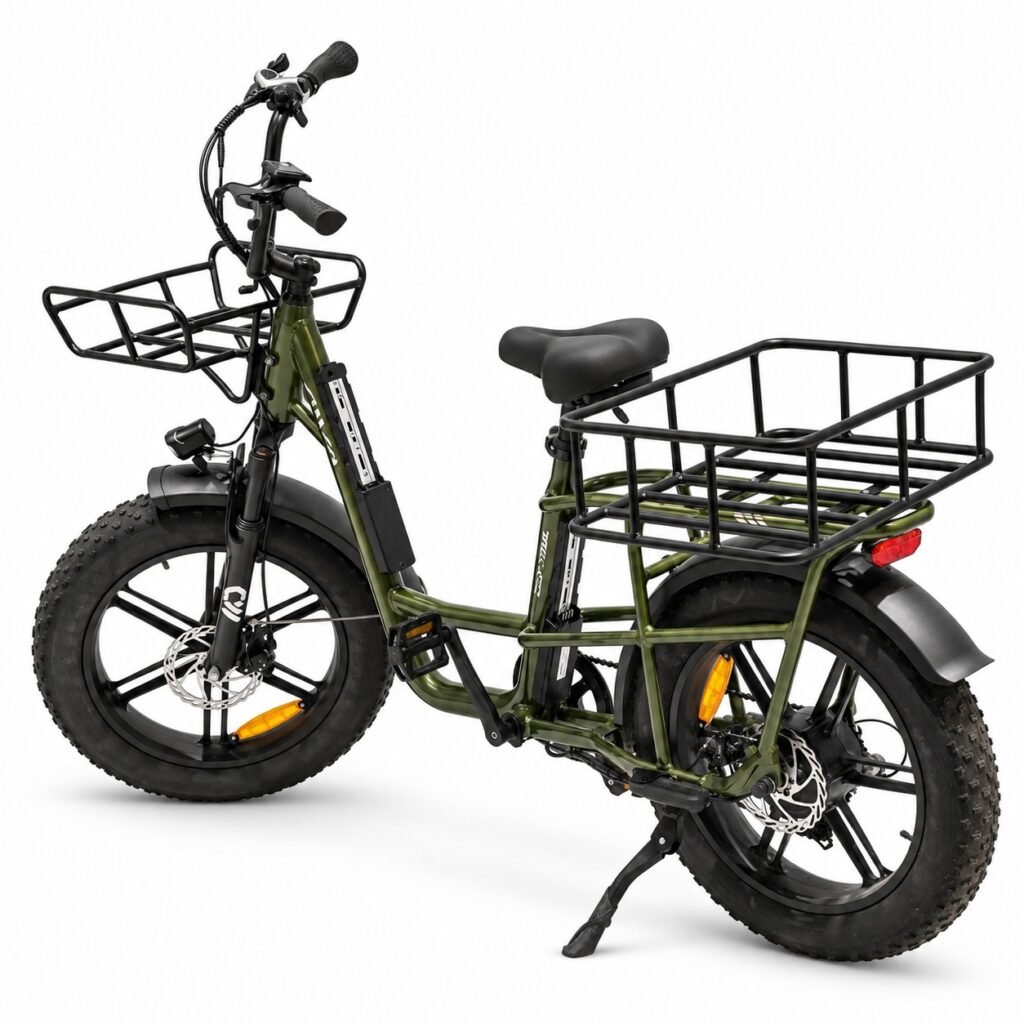
1. What Are Electric Cargo Bicycles Used For?
Electric cargo bicycles combine electric assistance with cargo-carrying capabilities. The Energy Saving Trust’s ecargo guidance also recommends selecting a model around the goods to be carried and the operating environment.
They are designed to transport goods while offering a compact alternative to larger commercial vehicles in suitable operating environments.
Common applications include:
Last-Mile Delivery
Delivery companies can use electric cargo bicycles for transporting parcels, documents, and smaller packages across urban areas.
Their compact dimensions may be useful in locations where larger vehicles face parking or access limitations.
Food and Grocery Delivery
Cargo bicycles with suitable storage compartments can support food delivery, grocery transportation, and local retail distribution.
Depending on the application, buyers may require enclosed cargo boxes, insulated compartments, or customized storage solutions.
Commercial and Retail Operations
Businesses can use cargo electric bicycles for moving merchandise, tools, equipment, and supplies between nearby facilities.
They may also be suitable for campuses, industrial parks, and selected commercial properties.
Urban Logistics
For short-distance transportation, cargo electric bicycles can form part of a broader delivery network.
Businesses can evaluate them alongside vans, motorcycles, and other transportation solutions to determine the most suitable fleet configuration.
2. Types of Cargo Electric Bicycles Available from China
When evaluating electric cargo bicycle suppliers China has to offer, compare their available designs against the intended application. Not every supplier offers every format.
Front-Loading Cargo Electric Bicycles
These models feature a cargo compartment or platform positioned at the front of the bicycle.
They can be configured for transporting parcels, goods, and selected commercial materials.
Rear-Loading Cargo Electric Bicycles
Rear cargo configurations are designed to carry goods behind the rider.
Depending on the model, they may feature cargo racks, boxes, or reinforced rear platforms.
Longtail Electric Cargo Bicycles
Longtail designs extend the rear carrying area to provide additional space for cargo.
They may be suitable for commercial applications requiring a relatively compact bicycle with increased carrying capacity.
Enclosed Cargo Electric Bicycles
Some commercial models feature enclosed storage compartments designed to protect goods from weather and external conditions.
These configurations may be useful for food delivery, retail logistics, and parcel transportation.
The appropriate design depends on cargo dimensions, payload requirements, operating conditions, and local regulations.
3. Key Specifications to Consider Before Procurement
Before requesting quotations, buyers should establish clear technical requirements.
Rated Payload Capacity
Payload capacity is one of the most important specifications for cargo electric bicycles.
Buyers should distinguish between rated payload, gross vehicle weight, and maximum permissible loading conditions.
The selected model should be suitable for the expected cargo weight and distribution.
Motor Performance
Motor specifications influence acceleration, hill-climbing capability, and assistance under load.
Important factors include rated power, voltage, torque characteristics, controller configuration, and motor placement.
Actual performance should be assessed under realistic operating conditions rather than relying solely on advertised specifications.
Battery Capacity and Range
Battery capacity influences the amount of energy available for operation.
When comparing different models, consider battery chemistry, voltage, amp-hour rating, watt-hour capacity, charging time, and expected daily mileage.
Actual range varies according to rider weight, cargo load, terrain, speed, weather, and riding behavior.
Frame and Cargo Structure
The frame must be designed for the intended load and operating environment.
Buyers should evaluate frame materials, welding quality, structural design, braking systems, suspension, and tire specifications.
Safety and Local Compliance
Cargo electric bicycles may be subject to specific regulations relating to vehicle classification, speed, motor output, braking, lighting, and electrical safety. Confirm the requirements for the exact vehicle configuration and destination with the responsible local authorities or qualified advisers before ordering. A cargo rack or delivery box does not by itself establish bicycle classification or permission to use bicycle lanes.
4. Compare Suppliers and Wholesale Quotations
For cargo e-bike sourcing from China, shortlist suppliers against the same written specification. Ask about manufacturing responsibilities, inspection records, spare-parts availability and warranty arrangements. Confirm what Chinese cargo e-bike manufacturers can supply for your intended project rather than assuming every cargo format is available from every factory.
Compare the electric cargo bike price at the same order quantity, currency and delivery basis. Record whether the battery, compatible charger, cargo rack or box, packaging and requested accessories are included. Ask for the minimum order quantity and confirm any branding or configuration charges. For a broader sourcing checklist, read our China electric bicycle procurement guide.
Include freight, insurance, customs clearance, applicable import charges and local delivery when planning the landed cost. Check which items the quotation already includes to avoid counting them twice. Agree on the named delivery location and the applicable Incoterms rule; the ICC explains that these rules allocate delivery tasks, costs and risks between buyers and sellers.
5. Discuss Your Cargo Bicycle Project with FALCON
Before ordering wholesale electric cargo bikes, evaluate a sample on a representative route with an approved load. Check handling, braking, parking, charging and the cargo arrangement against the intended use. Confirm the written production specification and service responsibilities before approving a bulk order.
Contact FALCON with your destination market, intended delivery work, rider and cargo weights, cargo dimensions, route conditions, estimated quantity and branding requirements. Explore the ZR-CP053 cargo bike and ZT-V3Pro compact cargo bike as starting points, then ask about available configurations and sample arrangements. These examples do not imply availability of every cargo format described above.