
An electric off road dirt bike should make every part of the ride work together: the climb, the corner, the return journey and the preparation for the next outing. Choosing the right motorcycle means looking beyond top speed to find a balance of controllable power, suitable equipment and practical battery endurance. For dealers and importers, those same qualities create a product range that is easier to explain and support.
This guide covers the features that matter, the questions behind a credible range claim and the steps that turn a product enquiry into a well-defined purchase.
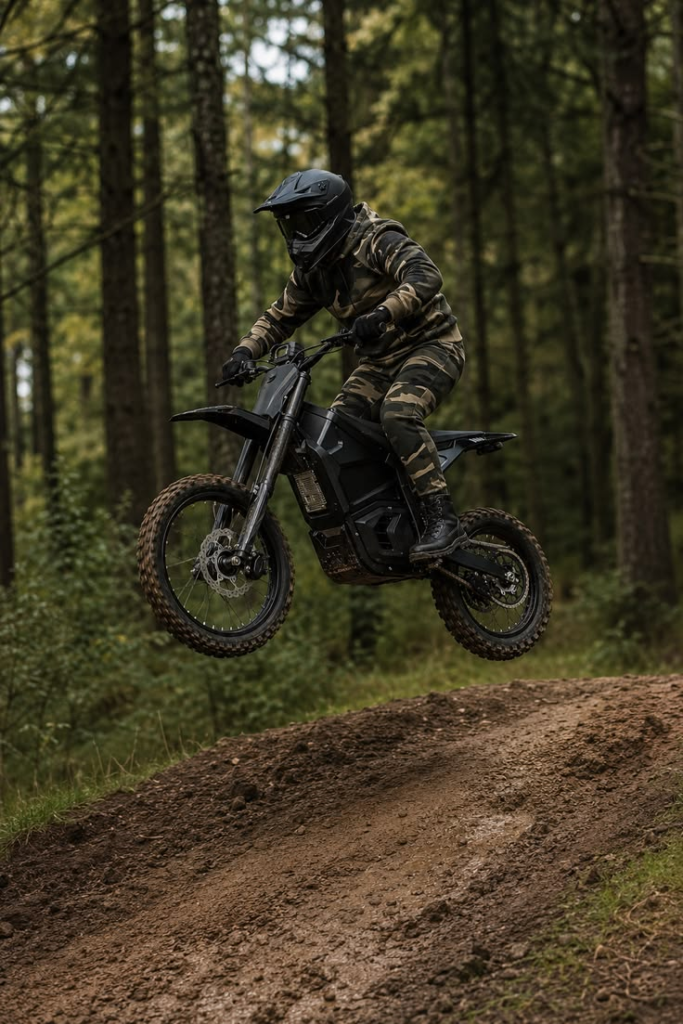
01 / What is an electric off road dirt bike?
An electric off road dirt bike is a battery-powered motorcycle intended for off-highway riding. Its electric motor uses energy stored in a rechargeable battery. It is different from a petrol dirt bike with an electric starter: an electric starter starts a combustion engine, while a battery-electric motorcycle uses electricity for propulsion.
Battery-electric propulsion produces no tailpipe emissions during operation. The U.S. Department of Energy explains this point-of-use benefit, while noting that electricity production can still create emissions. It is therefore more accurate to describe the vehicle as having no exhaust emissions during riding than to claim that its entire life cycle has no environmental impact.
Keep the category separate from pedal-assist mountain bicycles. A motorcycle’s intended use and permitted riding locations need their own review; electric propulsion does not make every vehicle a bicycle.
02 / Match the motorcycle to the riding environment
Start with a typical outing. Where will you ride, how demanding is the terrain and how long will you be away from charging? For an electric off-road motorcycle, a clear answer makes model comparisons more useful.
| Riding plan | Selection priority | What to verify |
|---|---|---|
| Recreational outings in designated areas | Comfortable fit and predictable handling | Intended rider, approved surfaces and session length |
| Technical trail riding | Control, maneuverability and appropriate chassis equipment | Terrain limits, suspension setup and ground clearance |
| Track-based riding | A motorcycle designed for the proposed workload | Explicit suitability for track use, jumps or competition |
| Managed riding experiences | Consistent preparation and service support | Commercial-use approval, rider requirements and charging turnaround |
Treat these as different buying briefs. An electric trail bike selected for recreational riding should not automatically be advertised as a motocross machine. Confirm capability through the manufacturer’s intended-use information and a suitable sample evaluation, not aggressive styling alone.
03 / Evaluate power, rider fit and chassis together
Make performance figures comparable
Ask whether the stated motor output is continuous-rated power or a short-duration peak. Request the measurement conditions and compare like with like. For torque claims, establish where the measurement is taken rather than comparing unlabeled figures.
During a demonstration, focus on smooth starts, predictable throttle response and controlled transitions between acceleration and braking. Where riding modes are available, establish what they change. Evaluate performance over a representative session rather than judging the motorcycle by one acceleration run.
Choose equipment that fits the rider
Review seat height, handlebar reach, footpeg position, permitted load and ready-to-ride weight with the battery installed. Assess the motorcycle in normal riding equipment and consider parking, loading and storage as well as riding.
Compare suspension specifications, adjustment options, brakes and tires against the planned terrain. Ask a qualified technician to help with setup where needed. The Motorcycle Safety Foundation’s off-road training program includes motorcycle setup, protective equipment, pre-ride inspection and control skills. Those fundamentals matter as much as the electrical specification.
04 / Understand battery range before planning the ride
Compare battery energy in watt-hours or kilowatt-hours rather than voltage alone. Nominal energy can be approximated by multiplying nominal voltage by amp-hour capacity, but stored energy is not the same as a guaranteed riding distance.
The Department of Energy’s general electric-vehicle guidance identifies rapid acceleration, heavy loads and significant inclines as factors that can reduce range. These principles help explain why a result from one test route cannot promise the same distance on every off-road outing.
Request the rider load, terrain, settings and starting and finishing charge levels behind any published figure. Record both riding time and distance during your own evaluation, and leave a practical reserve for the return journey.
A useful range claim explains the conditions. A useful riding plan also includes a return reserve and a confirmed charging arrangement.
Consider two different customers: one returns to a parking area between short sessions; another follows an out-and-back route. Even with the same motorcycle, their battery and charging priorities are different. Plan around the complete outing.
05 / Plan charging and maintenance before purchase
Confirm the supplied charger, compatible electrical supply and charging time for a stated charge window. Check whether the selected motorcycle supports battery removal and how the pack is handled. Follow the manufacturer’s charging, temperature and storage instructions.
Do not select a replacement charger simply because its connector fits. In its micromobility safety guidance, the U.S. Consumer Product Safety Commission warns that physically compatible connectors can still belong to incompatible chargers. For the motorcycle you buy, use the supplied charger or a replacement explicitly approved for its battery system.
Electric does not mean maintenance-free. The Department of Energy notes that electric vehicles have fewer engine-related maintenance requirements. An off-road motorcycle still needs the inspections and servicing specified for its brakes, tires, suspension, bearings and drive system.
Request the service schedule, warranty terms and replacement-parts process. Include preparation, riding equipment and after-sales support when comparing ownership costs, not just the initial purchase price.
06 / Build an electric dirt bike wholesale range with a clear purpose
For a dealership planning an electric dirt bike wholesale range, every model should answer a different customer need. One may serve recreational riders; another may address a more demanding application, subject to confirmed suitability. Keep those differences visible in product descriptions and sales demonstrations.
Begin with a written purchasing brief covering the destination, rider profile, terrain, target price position and estimated quantity. Ask for a sample matching the proposed production configuration. Record component references, assembly requirements and unresolved questions before approving the order.
FALCON’s OEM/ODM program starts with market requirements and confirmation of available configurations, branding and packaging. For a branded range, separate visual changes from requests affecting the chassis or electrical system. Agree on what is feasible and document the approved specification before production.
Explore the FALCON electric dirt bike and motorcycle collection as a starting point, then assess individual models against your intended customer rather than assuming every vehicle in the category has the same capabilities.
07 / Frequently asked questions
Is an electric off road dirt bike suitable for a beginner?
Suitability depends on the motorcycle and rider. When choosing an electric dirt bike for adults, check the manufacturer’s rider guidance, dimensions, controls and intended use. Choose appropriate instruction and protective equipment; a reduced-power setting does not replace learning how to brake, turn and manage the motorcycle.
Can I use it on public roads or bicycle trails?
Do not assume permission from the product name. Confirm the vehicle’s classification and the rules of the exact location with the relevant authority. Treat public-road use, designated motorcycle trails and bicycle trails as separate questions.
What information should I send for a wholesale quote?
Include your target market, preferred models, rider requirements, estimated quantity and configuration priorities. Add branding, packaging, spare-parts and documentation needs so the quotation covers the offer your business intends to sell.
08 / Start your electric off road dirt bike project with FALCON
For a closer comparison of performance priorities, read our guide to power, control and endurance.
The right motorcycle brings together the rider, route and ownership plan. For business buyers, that also means a product your sales team can explain and your service partners can support.
Contact FALCON for product recommendations and a tailored wholesale quotation. Share your company name, destination market, intended riding conditions and estimated order quantity. Discuss current model availability, sample arrangements and customization requirements to build an electric off road dirt bike offer around your customers.