
A high performance electric dirt bike should offer more than strong acceleration. The real test is how confidently it connects power, handling and battery endurance throughout a ride. For riders, that means choosing a motorcycle suited to their terrain and experience. For dealers and importers, it means selecting a product that customers can understand, evaluate and maintain long after the first demonstration.
This guide looks beyond headline specifications to explain what matters when comparing an electric dirt bike for recreational trails, demanding off-road sessions or a new wholesale product range.
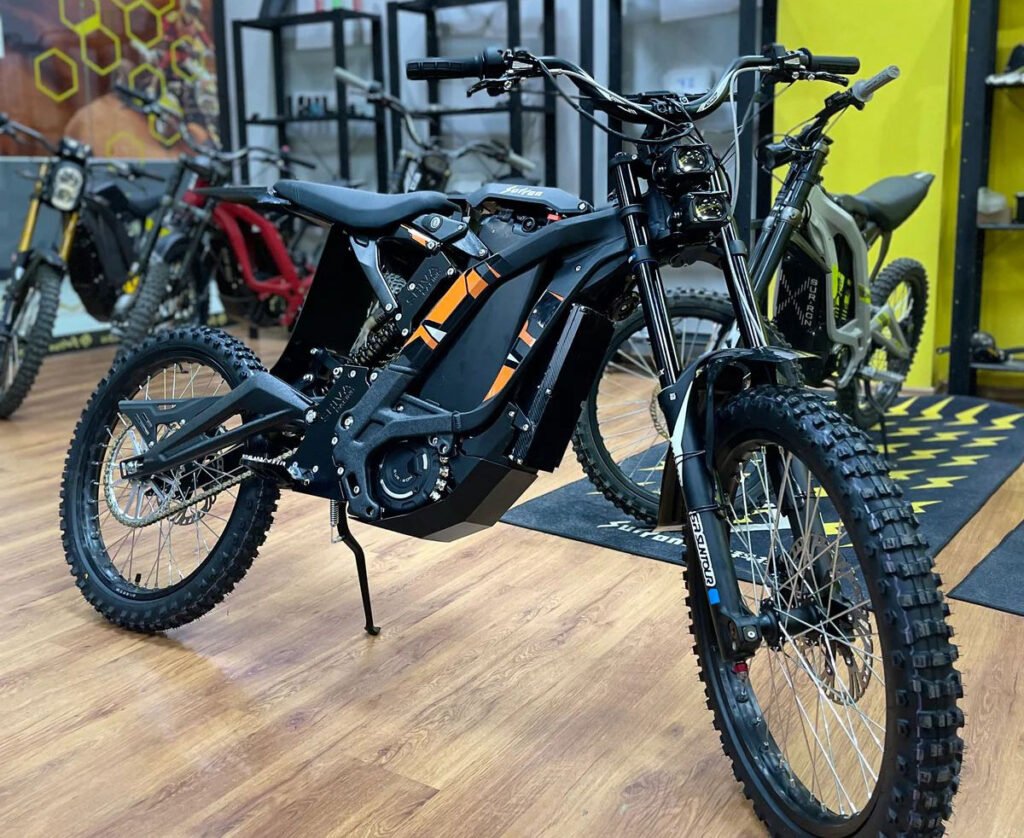
01 / What makes an electric dirt bike high performance?
Think of performance as a balance between usable power, rider control, session endurance and dependable ownership. A motorcycle that accelerates quickly but does not fit the rider or the intended route is not necessarily the better choice.
Start with the riding environment. Technical trails call for careful evaluation of low-speed control and maneuverability. More open riding areas may place greater emphasis on repeatable acceleration and braking. Track use needs explicit confirmation that the motorcycle is designed for the proposed activity, including any jumping or competition.
Define these requirements before choosing a motor rating. The goal is a complete motorcycle that performs the job you actually need.
02 / Choose usable power, not just a bigger number
Compare power figures on the same basis
Ask whether the advertised output is continuous-rated power, peak power or another measurement. Request the test conditions and the duration associated with the rating. Do not compare one motorcycle’s short-duration maximum with another’s sustained output as though they describe the same capability.
For a high performance electric dirt bike, request more than a single acceleration result. Ask how the proposed system performs through a representative session and whether battery charge level or operating temperature affects available output.
Evaluate the response at the controls
During an appropriate demonstration, assess starts, small throttle adjustments and transitions between acceleration and braking. Where selectable riding modes are available, establish what each setting changes and whether it suits the intended rider.
Look at weight as well as output. Compare ready-to-ride weight with the battery installed, then assess how manageable the motorcycle feels when parking, turning and loading it for transport. A power figure cannot answer those practical questions.
03 / Give the chassis, suspension and brakes equal attention
The motor is only one part of the buying decision. Review the frame, suspension, braking equipment and rider dimensions together. Use a consistent checklist rather than judging off-road capability from appearance.
| Area to compare | What to check | Question to answer |
|---|---|---|
| Rider fit | Seat height, handlebar reach, footpeg position and load limits | Can the intended rider comfortably operate the controls? |
| Suspension | Component specifications, adjustments and recommended setup | Is the configuration appropriate for the rider and terrain? |
| Braking | Brake specification, lever feel and service requirements | Can braking be assessed consistently under approved conditions? |
| Wheels and tires | Sizes, intended surfaces and replacement availability | Does the equipment match the planned riding environment? |
Assess fit in normal riding equipment and have a qualified person review the setup where needed. The Motorcycle Safety Foundation’s off-road curriculum emphasizes protective equipment, motorcycle setup, pre-ride inspection and control skills. Those fundamentals belong in the evaluation of an electric off-road motorcycle too.
04 / Plan battery endurance and charging together
Compare energy capacity and test conditions
Ask for nominal battery energy in watt-hours or kilowatt-hours and, where available, usable energy. Voltage alone does not describe stored energy: nominal watt-hours are approximately nominal voltage multiplied by amp-hour capacity. Neither figure, by itself, establishes riding distance.
The U.S. Department of Energy’s electric-vehicle guidance explains that rapid acceleration, heavier loads and significant inclines can reduce range. These general principles are useful when interpreting an electric dirt bike range claim, but they are not a model-specific test result.
Request the rider load, terrain, riding settings and charge levels used for the quoted result. For your own evaluation, record both distance and riding time on a representative route. Include a practical return reserve rather than planning around the longest advertised distance.
Make charging fit the outing
Confirm the supplied charger’s input requirements, charging time and the charge window used in that estimate. Check battery-removal arrangements only if the selected model supports removal. Consider how the motorcycle will be charged at home, in a workshop or between planned sessions.
Use the supplied charger or a replacement explicitly approved for the motorcycle. In its micromobility charging guidance, the U.S. Consumer Product Safety Commission warns that a connector can fit while the charger remains incompatible. Follow the actual motorcycle’s charging and storage instructions.
Compare the complete riding session: how the motorcycle responds, how much energy it uses and how it will be prepared for the next outing.
05 / Compare ownership value, not just purchase price
Electric propulsion changes the maintenance requirements, but it does not remove the need for care. The Department of Energy’s maintenance overview notes that all-electric vehicles have fewer moving parts and fewer engine-related fluids to maintain. That is not a promise of maintenance-free motorcycle ownership.
Request the model’s service schedule for brakes, tires, suspension, bearings and its particular drive system. Ask about battery replacement, diagnostic support and who can carry out electrical repairs. Keep those responsibilities clear before purchasing.
Compare quotations that include the same equipment and support. A useful budget covers the motorcycle, charger, preparation, riding equipment, routine servicing and likely replacement parts. Avoid treating an initial discount as the whole value proposition.
06 / For dealers and importers: turn performance into a clear product offer
An electric dirt bike wholesale range is easier to present when each model has a defined customer. Separate recreational riding requirements from more demanding trail or track projects, and describe the intended use accurately.
Before placing an order, prepare a brief covering your destination market, rider profile, terrain, target price position and expected quantity. Request a written configuration, sample terms and the documentation relevant to the proposed vehicle. Review local classification and intended-use requirements with the appropriate local specialists.
Use the sample to prepare your sales and service teams. Photograph the actual components, record the agreed specification and collect questions from potential customers. Confirm parts references, packaging, assembly requirements and warranty responsibilities.
For a custom electric dirt bike project, separate branding from technical changes. Colors, graphics and packaging can be discussed alongside available options, while changes affecting the battery, chassis or performance need technical assessment. Confirm feasibility and commercial terms before presenting a customized model to customers.
07 / Frequently asked questions
Does higher motor power always mean a better dirt bike?
No. Compare how the complete motorcycle fits the intended rider and route. Output is one consideration alongside control, weight, battery endurance, braking and support. Ask for comparable measurements instead of selecting a model solely by its largest advertised number.
How much battery range should I look for?
Start with your planned riding session and charging opportunities. Request test conditions, evaluate a representative route and allow a practical reserve. There is no single distance target that is appropriate for every recreational trail or track session.
Can a beginner choose a high-performance model?
Selection should follow the rider’s experience, fit and the manufacturer’s guidance. A lower-power mode does not replace instruction or make every motorcycle suitable for a beginner. Use appropriate protective equipment and seek hands-on training before progressing to more demanding riding.
08 / Discuss your electric dirt bike project with FALCON
The right high performance electric dirt bike brings power, control and endurance together around a real riding need. For a business buyer, it also needs an agreed specification and a practical plan for customer support.
For broader industry context, explore our high-performance electric dirt bike market outlook.
Developing a new electric motorcycle range? Contact FALCON for current product information and a tailored wholesale quotation. Share your target market, intended riding conditions, preferred configuration and estimated quantity. Ask about available models, sample arrangements, spare-parts support and OEM/ODM options to define the next step for your project.