
China has become an important sourcing destination for international electric bicycle buyers, offering a broad selection of models, manufacturing options, and component configurations.
For overseas importers, wholesalers, and distributors, China electric bicycle procurement presents opportunities to develop competitive product portfolios and establish long-term supply relationships.
However, purchasing electric bicycles from China involves more than comparing factory prices. Buyers need to understand product specifications, battery configurations, supplier capabilities, shipping expenses, and local import regulations.
This guide explains how to evaluate Chinese electric bike prices, identify suitable suppliers, and organize electric bike sourcing from China around a clear procurement process.
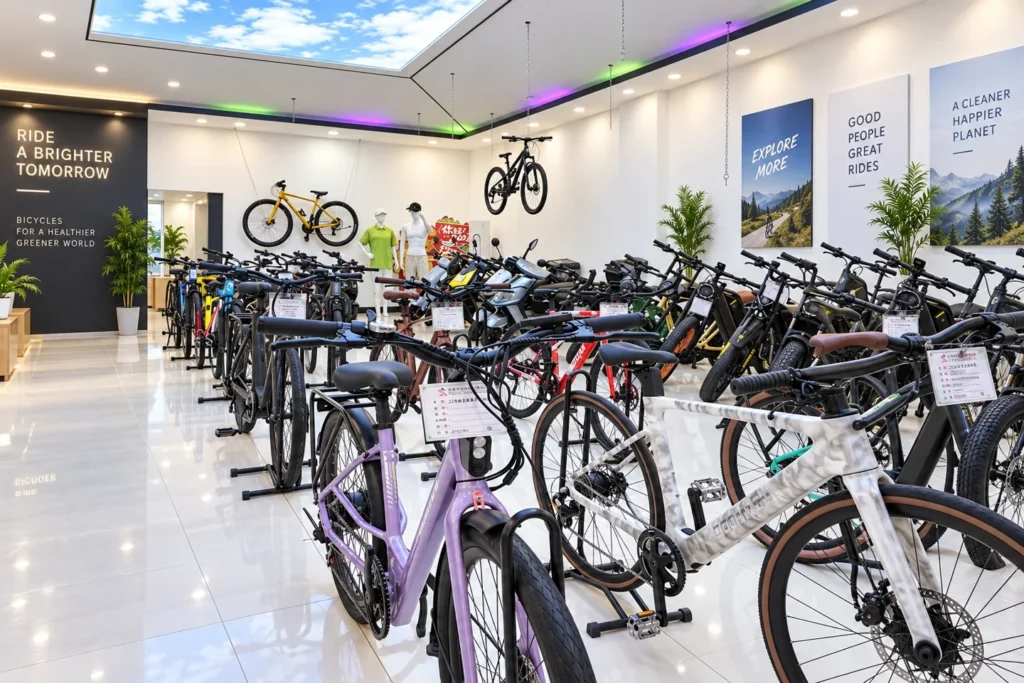
1. Why Source Electric Bicycles from China?
China electric bicycle manufacturers form part of a diverse manufacturing and supply chain ecosystem for electric bicycles.
International buyers can explore different vehicle designs, electrical configurations, frame materials, and accessories depending on their target markets.
Common product categories include:
- Urban electric bicycles for daily transportation.
- Mountain electric bikes for recreational and outdoor applications.
- Folding electric bicycles for compact storage and commuting.
- Fat tire electric bikes for different riding environments.
- Cargo electric bicycles for commercial transportation.
- Customized electric bicycles for private-label brands.
For distributors, access to different configurations makes it possible to develop product collections for different customer groups.
Buyers should nevertheless evaluate each manufacturer’s actual production capabilities, quality management, and export experience before placing orders.
2. How Much Do Chinese Electric Bicycles Cost?
One of the most common questions from overseas buyers is: What should a buyer include when evaluating the e-bike price in China?
There is no universal factory price because electric bicycles differ considerably in materials, components, battery systems, and manufacturing specifications.
The following factors have a direct influence on procurement costs.
Battery Configuration
The battery is one of the most important components affecting the total cost of an electric bicycle.
Buyers should compare battery chemistry, voltage, capacity, cell specifications, battery management systems, and warranty conditions. Confirm whether the quoted complete-bike price includes the battery and compatible charger, and record the agreed configuration in writing.
Different battery configurations can produce significant differences in product pricing and operating performance.
Motor Specifications
Motor configuration affects the bicycle’s performance and suitability for different applications.
Important considerations include rated power, nominal voltage, torque characteristics, motor type, and compatibility with the controller and battery system.
A higher power rating does not automatically mean a better product. Buyers should evaluate the complete electrical system against their target market requirements.
Frame Materials and Product Design
Frame construction, welding quality, finishing, suspension, tires, braking systems, and overall design also influence manufacturing costs.
For example, a folding electric bicycle and a heavy-duty electric cargo bicycle may require very different frame structures and production processes.
Order Quantity and Customization
For wholesale electric bicycles, prices are often influenced by order volume and product customization.
Additional requirements such as private labeling, customized colors, packaging, accessories, and specific component configurations may affect production costs and minimum order quantities.
International Shipping and Import Costs
The factory quotation is not necessarily the final landed cost.
International buyers should account for:
- Domestic transportation in China.
- Export packaging and handling.
- International freight.
- Cargo insurance.
- Customs duties and applicable taxes.
- Customs clearance and local delivery.
The final cost depends on the destination country, shipping arrangements, product classification, and agreed Incoterms.
3. How to Choose Reliable Electric Bicycle Suppliers in China
Selecting a reliable supplier is essential for building a sustainable wholesale business.
Before making a purchasing decision, international buyers should evaluate several important areas.
Manufacturing Capabilities
Understand whether the supplier is an actual manufacturer, a trading company, or a sourcing partner.
Request company information, production details, product catalogs, and relevant manufacturing documentation.
Where appropriate, arrange a factory visit or independent inspection.
Product Quality and Testing
Request detailed technical specifications and ask how products are inspected before shipment.
Important areas include:
- Frame structure and welding quality.
- Battery performance and electrical protection.
- Motor and controller compatibility.
- Braking system performance.
- Charger specifications.
- Overall assembly and finishing.
Testing and certification requirements should be verified for the destination market.
Customization and Private Labeling
For distributors and brand owners, customization can help differentiate products.
Depending on the supplier, options may include:
- Customized logos and branding.
- Frame colors and finishes.
- Battery configurations.
- Motor specifications.
- Product accessories.
- Packaging and user manuals.
Always confirm the available customization options, minimum order quantities, and additional costs.
Export Experience and Documentation
International suppliers should understand the documentation and transportation requirements associated with exporting electric bicycles.
Depending on the destination and product configuration, buyers may need commercial invoices, packing lists, battery transport documentation, conformity assessments, and other import-related paperwork.
4. How to Calculate the Total Cost of Electric Bicycle Procurement
A competitive factory quotation does not always result in the most competitive final purchase.
To compare suppliers accurately, buyers should calculate the total landed cost.
Total Landed Cost = Product Purchase Cost + Domestic Logistics + International Freight + Insurance + Import Duties and Taxes + Customs Clearance + Local Delivery
For example, two suppliers may offer similar factory prices but have different packaging arrangements, shipping costs, warranty conditions, or product specifications.
Comparing the complete procurement cost provides a more realistic basis for supplier selection.
Buyers should also clarify the applicable Incoterms rule, such as FOB, CIF, or DAP, and specify the named port or destination. The ICC explains that Incoterms rules allocate delivery tasks, costs and risks. Check which costs the quotation already includes so freight, insurance or import charges are not counted twice. Identify recoverable import taxes separately when calculating cash funding and the economic cost of the order.
5. A Practical Electric Bicycle Procurement Process
A structured procurement process can reduce purchasing risks and improve communication with suppliers.
Step 1: Identify your target market
Understand local customer demand, preferred bicycle styles, regulatory requirements, and expected retail positioning.
Step 2: Define product specifications
Prepare requirements covering frame design, motor power, battery capacity, braking system, accessories, and other technical details.
Step 3: Request wholesale quotations
Contact several suppliers and request comparable quotations based on the same specifications and order quantities.
Step 4: Evaluate samples
Before placing a large order, inspect a sample for product quality, electrical performance, assembly, and packaging.
Step 5: Confirm commercial terms
Agree on pricing, payment arrangements, production schedules, warranty conditions, and shipping responsibilities.
Step 6: Arrange quality inspection and shipment
Check the finished products against the approved specifications before shipment and confirm all required documentation.
6. Understanding Local Regulations Before Importing
Electric bicycle regulations vary significantly between countries and regions.
Some markets classify electric bicycles according to motor power, maximum assisted speed, pedal-assistance systems, and other technical characteristics.
Other markets may impose additional requirements for batteries, chargers, lighting, braking systems, and product safety.
Importers should confirm the applicable vehicle classification and conformity requirements before ordering.
A model that is acceptable in one country may require modifications or additional approvals in another.
Frequently Asked Questions
Why are Chinese electric bicycle prices different between suppliers?
Prices vary according to battery specifications, motor systems, frame materials, components, production processes, order quantity, and customization requirements. Buyers should compare equivalent specifications rather than looking at unit prices alone.
Can I purchase electric bicycles directly from Chinese manufacturers?
Yes. International buyers can work directly with manufacturers or use sourcing companies that coordinate product selection, supplier communication, quality inspection, and export arrangements.
What is the typical minimum order quantity?
MOQ varies by supplier and product. Standard models may have different order requirements from customized or private-label products. Buyers should confirm the MOQ when requesting a quotation.
Can electric bicycles be customized for overseas markets?
Many suppliers offer customization options, including branding, colors, battery configurations, accessories, and product packaging. The feasibility of each modification should be confirmed before production.
Conclusion: Build a Competitive Electric Bicycle Supply Chain
China electric bicycle procurement offers international buyers access to a wide range of products and manufacturing options.
However, successful sourcing depends on more than finding a low factory price. Product quality, technical compliance, supplier reliability, shipping costs, and after-sales support all influence the long-term value of a purchasing decision.
For importers and distributors, establishing a reliable supply relationship can provide a foundation for developing a competitive electric bicycle business.
Looking for electric bicycles from China?
Contact FALCON EV Group to discuss your product requirements, target market, and wholesale purchasing plans. Our team can help you explore suitable product configurations and discuss commercial sourcing requirements for your business.