
The electric off road dirt bike market connects two business opportunities: recreational motorcycling and electric mobility. For dealers and importers, the attraction is not simply a different power source. It is the chance to offer a clearly positioned riding experience, supported by suitable products, demonstrations and local service. Understanding the market starts with separating genuine off-road motorcycle demand from the much broader electric bicycle and commuter scooter categories.
01 / Market size: understand what the numbers measure
Fortune Business Insights estimates the global off-road motorcycle market at USD 3.31 billion in 2025, with a forecast of USD 4.91 billion by 2034. Its scope includes both internal-combustion and electric motorcycles. These figures describe the wider industry, not electric dirt bikes alone.
For electrification context, the IEA’s Global EV Outlook 2026 reports almost 10 million electric two-wheeler sales in 2025, up 15% year on year. That much broader category is not a measure of recreational dirt bike sales. The IEA definition excludes electrically assisted bicycles and low-speed scooters, so its figures should also be kept separate from those micromobility categories.
The two datasets should not be combined to calculate an electric off-road market share. Instead, use the motorcycle estimate to understand the surrounding industry and local dealer evidence to assess the opportunity for a particular electric model. Neither source establishes a standalone worldwide sales total for the exact product category discussed here.
02 / Growth factors: connect the technology to a riding need
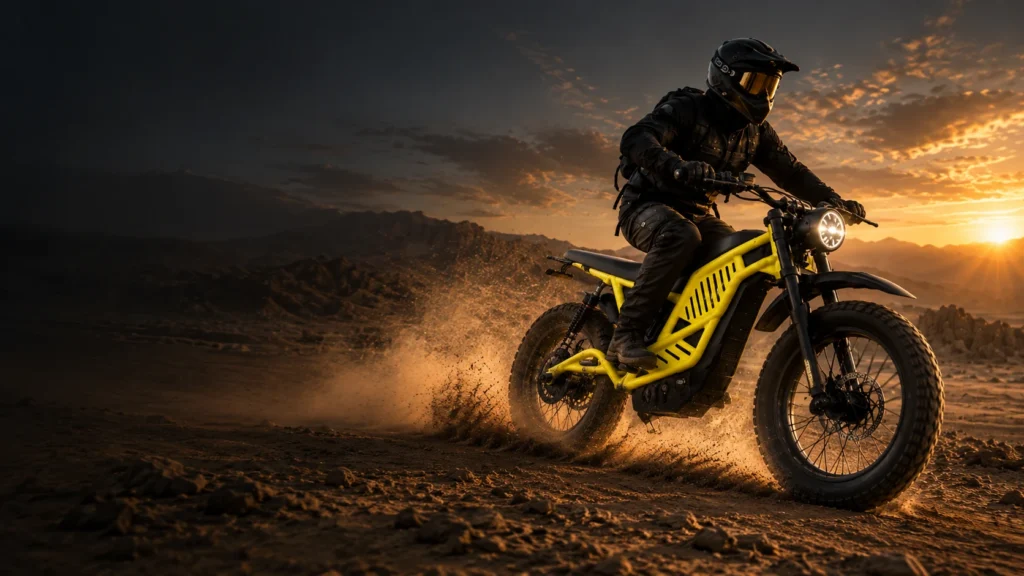
Product development provides a tangible demand signal. In its 2025 FREERIDE E announcement, KTM described selectable riding modes and an exchangeable battery. This is one manufacturer’s example of how electric platforms can offer choices in power delivery and riding-session planning, rather than evidence that every model has those features.
For dealers, the commercial opportunity is to demonstrate useful differences. A customer may value a manageable response at low speed, while another wants sustained performance during a longer session. A demonstration should answer those questions on terrain appropriate to the motorcycle and rider.
Ownership support can strengthen the proposition. Clear charging instructions, replacement battery availability and a workshop contact give customers something concrete to evaluate. An electric powertrain should not be marketed as maintenance-free: the purchasing discussion still needs to cover the chassis, brakes, tires and final drive.
03 / Segment the market by application
The following groups are a practical merchandising framework, not measured market-share categories. Each points to a different customer and a different reason to purchase.
| Segment | Potential customer | Commercial focus |
|---|---|---|
| Light recreational riding | Leisure riders using permitted riding areas | Manageable dimensions, predictable controls and accessible ownership |
| Trail and enduro-oriented riding | Enthusiasts and guided-ride operators | Route suitability, session duration and repair support |
| Motocross and track use | Specialist dealers, clubs and experienced riders | Validated performance, suspension setup and event eligibility |
| Managed riding experiences | Training businesses and private riding venues | Fleet consistency, charging turnaround and service access |
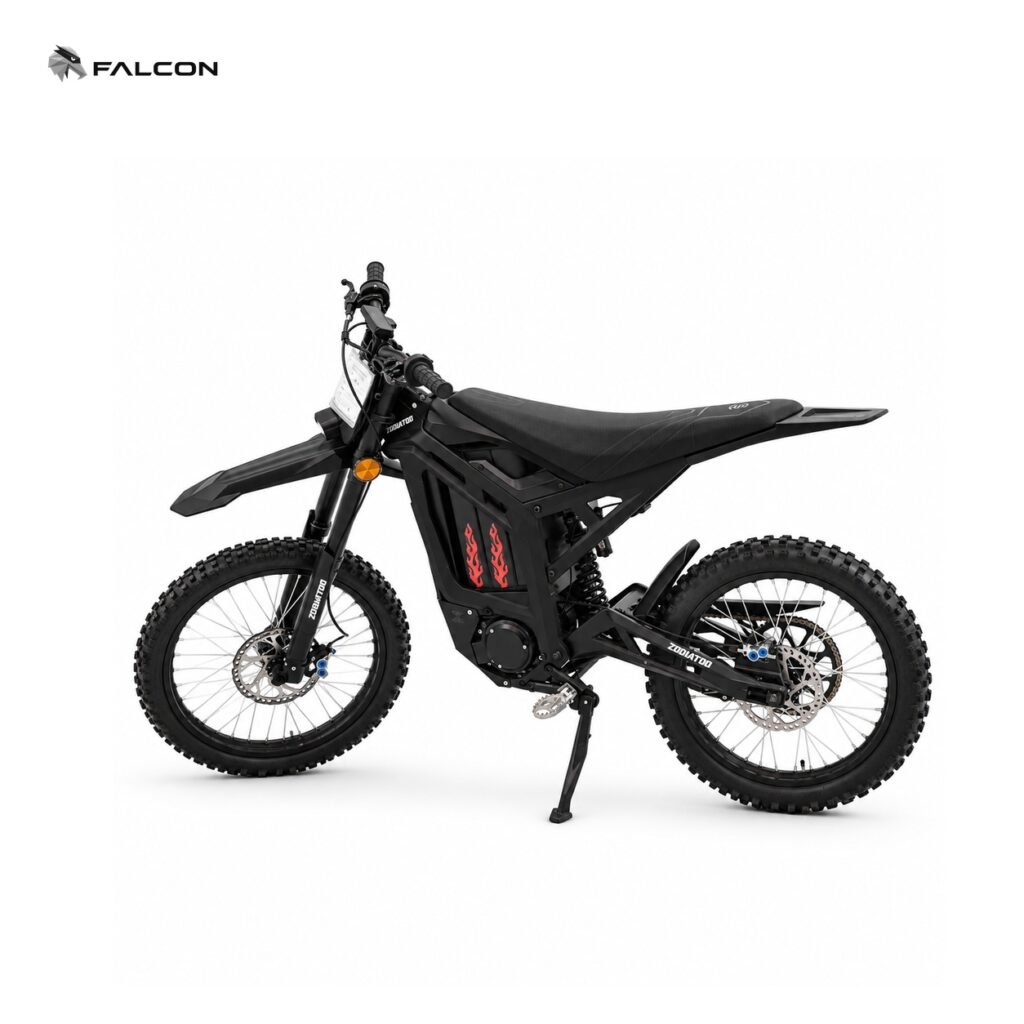
A compact leisure motorcycle and a competition machine should not share an identical sales promise. Keep intended use visible in product titles, specifications and demonstration plans. Confirm any jumping, racing or rental-use suitability with the supplier rather than inferring it from styling.
04 / Regional opportunities: choose a route to market
North America: assess specialist motorcycle channels
Fortune Business Insights assigns North America approximately 32.32% of the wider off-road motorcycle market in 2025. That supports examining the region’s motorcycle channels, but it does not establish the region’s electric-only share. A proposed entry route is a small group of specialist dealers able to demonstrate the product and provide repairs.
Europe: evaluate the riding venue and customer together
A useful European pilot could begin with a dealer connected to a riding school, club or managed venue. Establish where the motorcycle will be used and which documents the business needs before selecting the configuration. Treat recreational riding, competition and any proposed public-road use as separate requirements.
Asia Pacific: do not confuse commuter volume with leisure demand
The IEA’s two-wheeler figures help describe electrification, but they cannot identify which country offers the best dirt bike opportunity. Assess potential partners individually. A motorcycle importer serving recreational riders and an urban scooter wholesaler may need entirely different products, price positions and service arrangements.
These entry routes are commercial proposals, not a ranking of national electric dirt bike demand. Local interviews, sample feedback and actual sell-through should determine where the next order goes.
05 / Validate demand before expanding the range
Begin with one target rider, one intended use and a small product shortlist. Ask prospective dealers what customers currently buy, which objections stop a sale and which service problems are hardest to solve. Use those answers to define the sample configuration.
Track qualified enquiries, demonstrations, quotations and completed purchases separately. A popular product video may attract attention without generating buyers who can use the motorcycle in their local area. Record the reasons for lost sales, including fit, price, charging arrangements and lack of suitable riding access.
Seasonal planning also belongs in the pilot. Ask each dealer when customers prepare for riding, how much stock they can realistically display and when a replenishment order would need to arrive. Agree on a review date before adding extra colors or closely related models. A smaller range with clear feedback is easier to improve than a large opening order based on assumptions.
Use global figures to frame the opportunity, then use local customers and completed sales to decide the product mix.
06 / Explore an electric off road dirt bike project with FALCON
For a distributor, the strongest offer connects a suitable motorcycle with a clear customer and a workable ownership plan. FALCON welcomes enquiries from businesses exploring electric off-road products and related electric motorcycle categories.
Browse the FALCON electric dirt bike and motorcycle collection, then request a product discussion and wholesale quotation. Share your company name, destination market, intended riding conditions, preferred models and estimated quantity. Ask for current specifications and available options so the proposed product can be assessed against your project.